Marseille: A Whirlwind Journey Through a City of 111 Neighborhoods

The French port city of Marseille gains much of its vibrant character from its historical status as a gateway to the south, from its multiculturalism to its cuisine. Thanks to its variety of immigrant communities and the hilly topography that curves around its 57 km coastline, neighbourhoods (yes there are officially 111) are often village-like with distinct identities providing endless opportunities for discovery. This adaptable itinerary attempts to curate some pathways for newcomers through Marseille’s ever-evolving urban experience.
1 From Le Panier to MUCEM
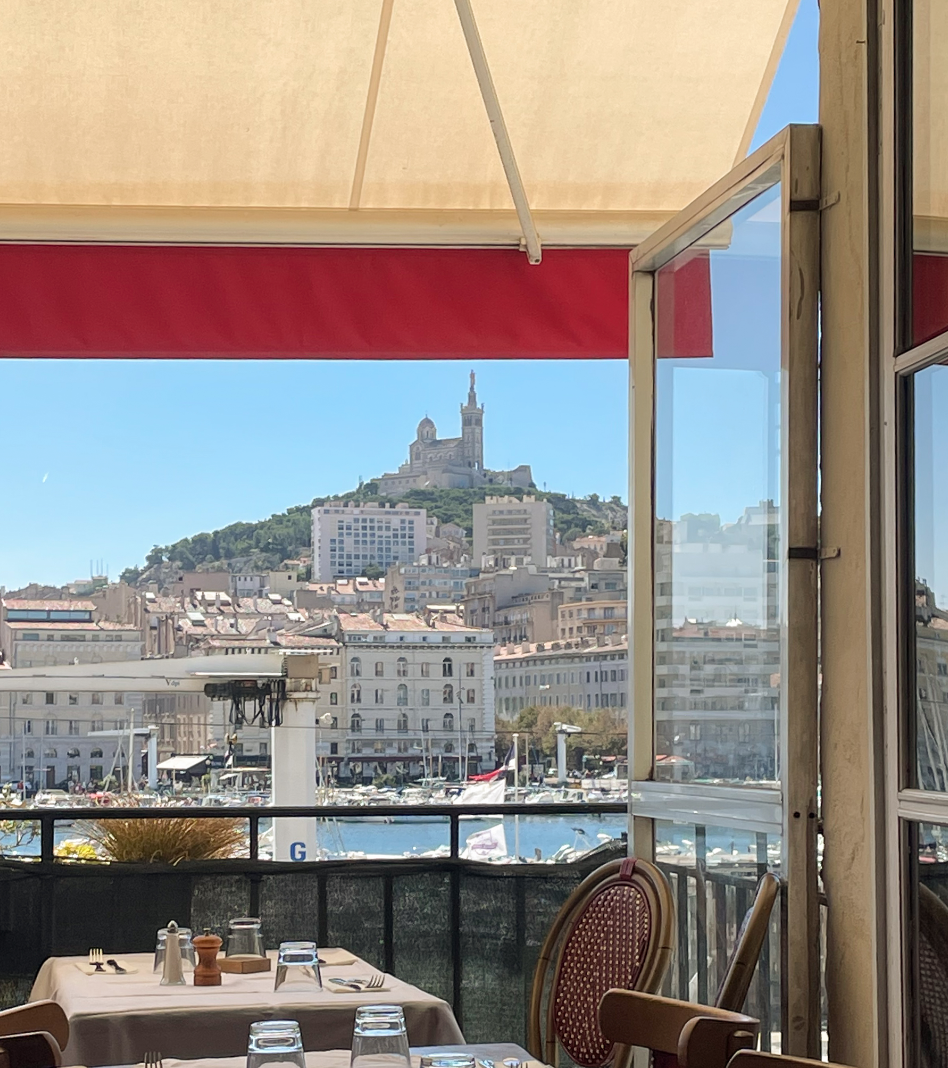
Since ancient times, people and goods arrived and departed from the Vieux Port (Old Port), therefore a good place to start – either by bartering for fresh sardines at the fish market or sipping a cocktail from the balcony of jazz bar La Caravelle, choose your speed. The 1940s modern development of La Tourette designed by French architect Fernand Pouillon buttresses its northern side, layered with squares and staircases where you’ll discover Placette restaurant and the edgy Ensemble bookshop.
Keep climbing and you’ll reach Le Panier, the area where the Greeks from Phocaea originally settled in 600 BC (the oldest neighborhood of France’s oldest city). Today there’s much to discover in the network of woven streets; eat a sandwich at Chez Lucas, buy illustrated cards by La Carterie, walk around the vaulted loggias of the 17th century Vieille Charité, or sip natural wine at Le Vin sur la Main.
From Le Panier, cross the dynamic steel bridge that intersects the 12th century Fort St Jean. Its landscaped ramparts offer panoramic views and shady benches to relax. From here you can cross another bridge onto the rooftop of the Museum of European and Mediterranean Civilizations (MUCEM ). The patterned, perforated concrete box was designed by local architect, Rudy Ricciotti. Wind your way down the exterior ramp that wraps the whole building, an immersive experience of shadows and framed segments of sea. That’s all before even buying a ticket to the exhibitions.
2 Exploring South of Vieux Port
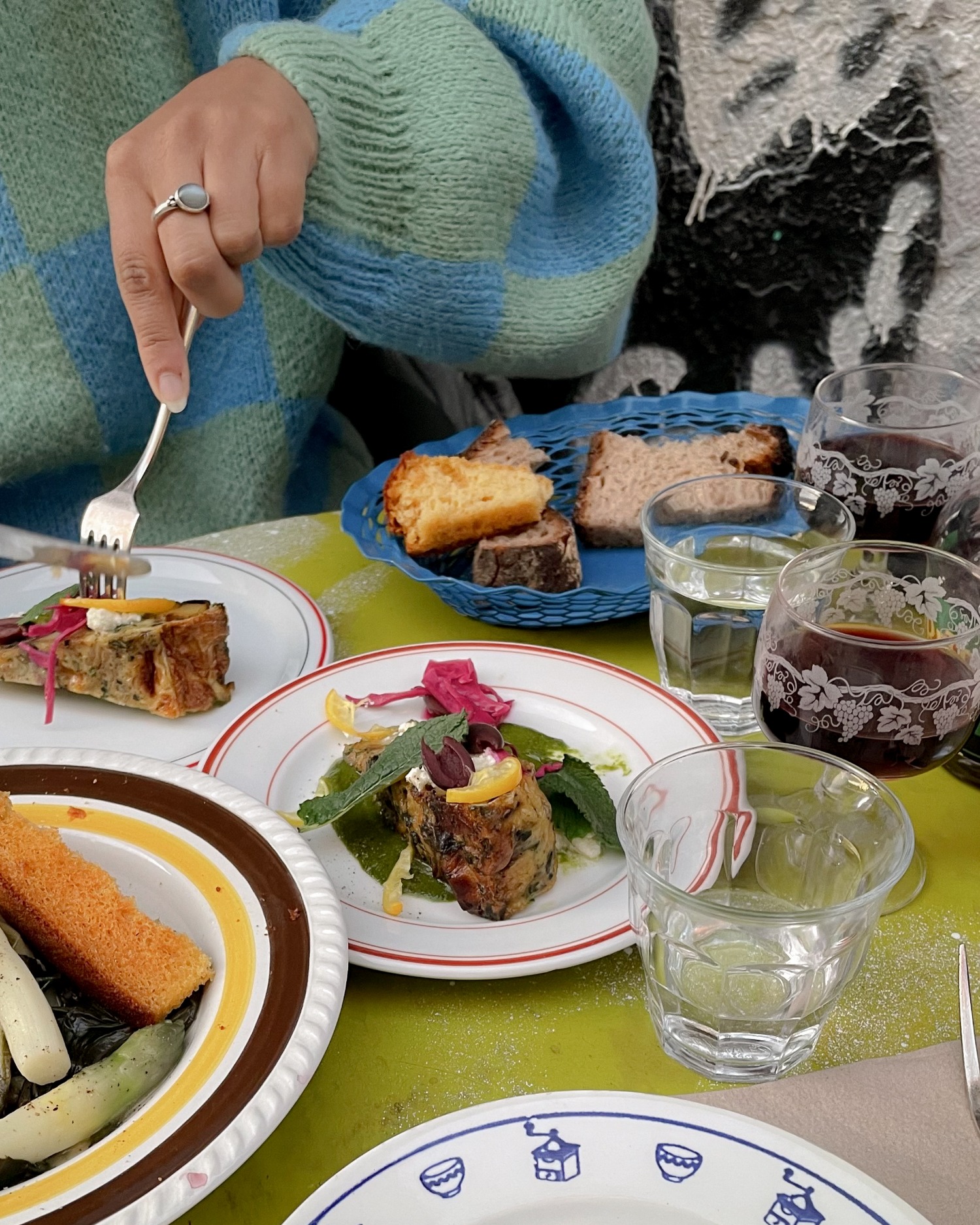
Back at the port, follow the commercial artery of Le Canabière, then turn down Rue d’Aubagne for visits to iconic hardware shop Maison Empereur, speciality deli Epicerie L’ideal, Chez Yassine for Tunisian food, and bazaars selling soap, baskets, textiles and ceramics. A few streets over, absorb the city’s youthful energy along the pulsing Cour Julien. The surrounding graffitied streets are alive with vintage shops, late night bars and vibrant restaurants such as Livingston and Limmat.
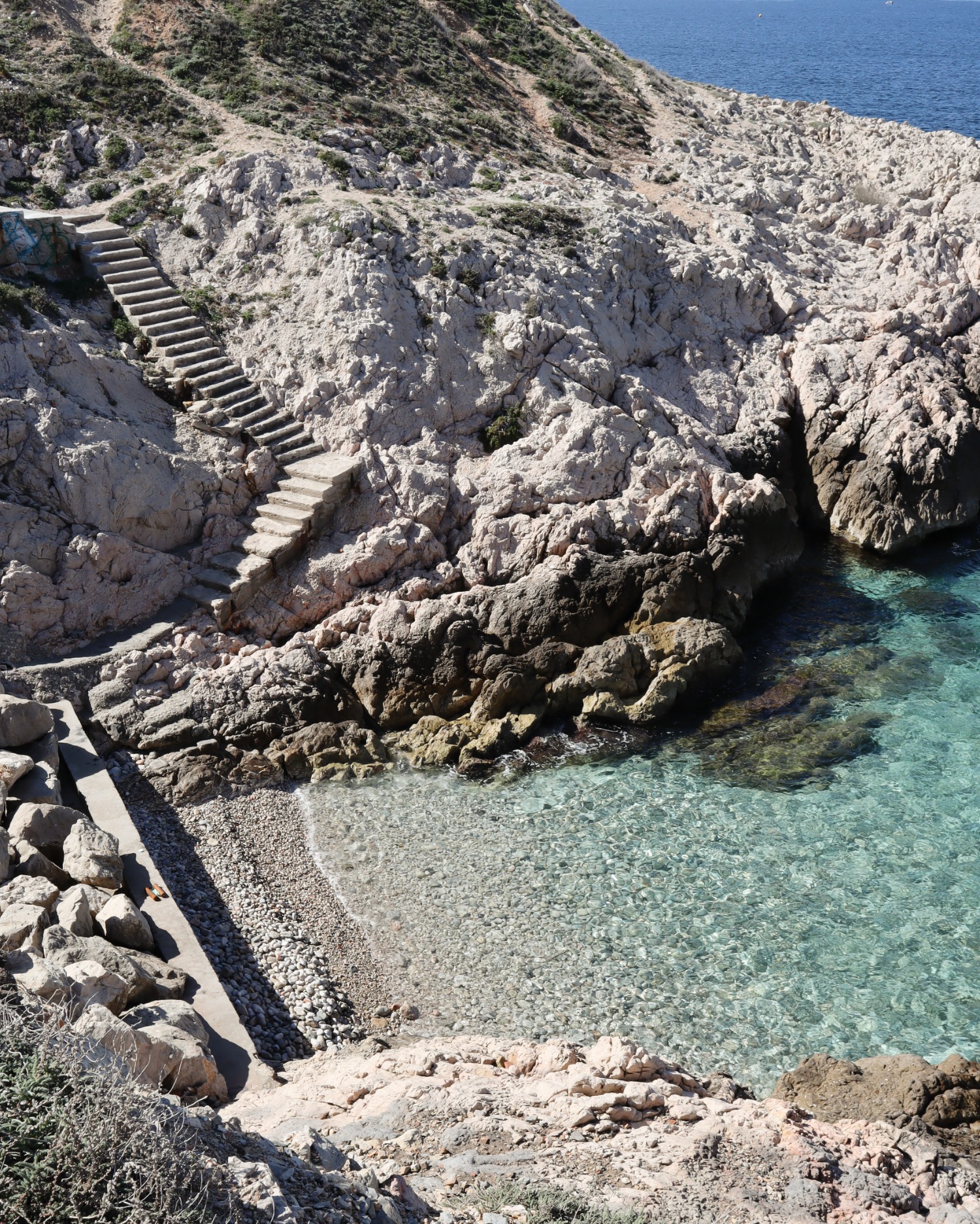
The Palais du Pharo, the imperial residence of Napoleon III, is situated to the south of Vieux Port, and beyond it, a string of charming seaside enclaves. First up, Plage des Catalans, a family-friendly sandy city beach with the best sunsets. Further along the coast at the Vallon des Auffes you’ll find esteemed fish restaurant Chez Fonfon, a great spot for an authentic bouillabaisse, Marseille’s speciality fish soup. At Malmousque, find hipster cafes Cécile Food Club and Boujou Coffee, art gallery La Traverse and La Meulerie fromagerie, before climbing down onto its rocky beaches for a swim.
3 Follow the Coastal Corniche
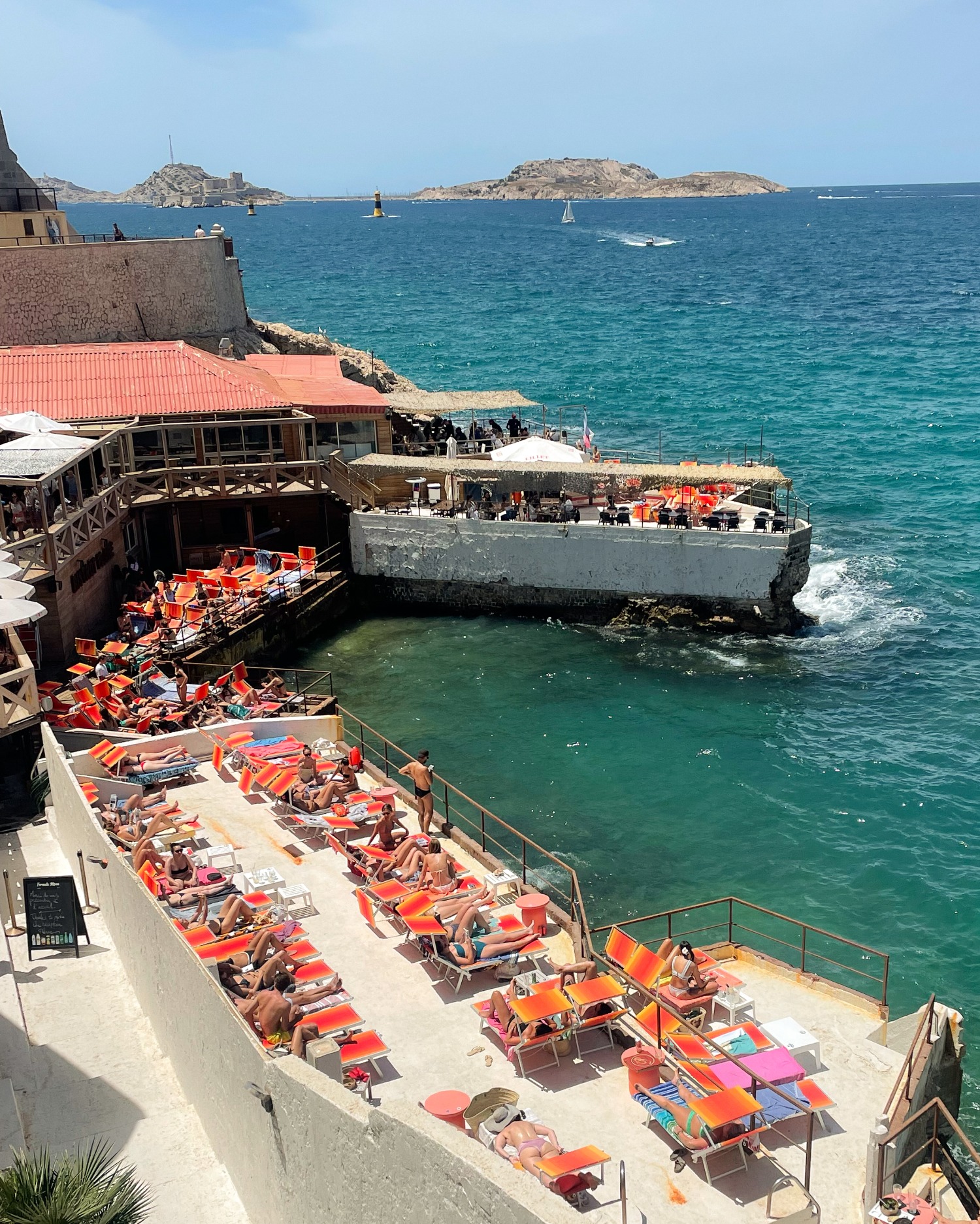
For a longer walk or cycle ride, follow the Corniche, the coastal road with its sinuously curving bench (the longest in Europe) popular with runners and walkers. You’ll reach more beaches, usually with their own laid-back cafes. If it’s culture you’re interested in, head inland at Avenue du Prado to explore the leafy boulevards of the 7th arrondissement: visit the Château Borély, a museum of decorative art and fashion; Le Corbusier’s colourful concrete Unité d’Habitation for an architecture tours; or Pavilion Southway, a gallery and house with a neo-gothic-medieval twist.
Follow the coast even further, to find the authentic fishing village of Les Goudes. Book lunch at one of the atmospheric fish restaurants, a traditional establishment such as Grand Bar des Goudes, or the playfully understated Tuba for a new take on Marseillais culture. This village is just one of the gateways to exploring the epic landscape of the mountainous limestone Calanques National Park. Plan your hiking route down to one of the picturesque coves with the useful Calanques app.
4 The View From Above
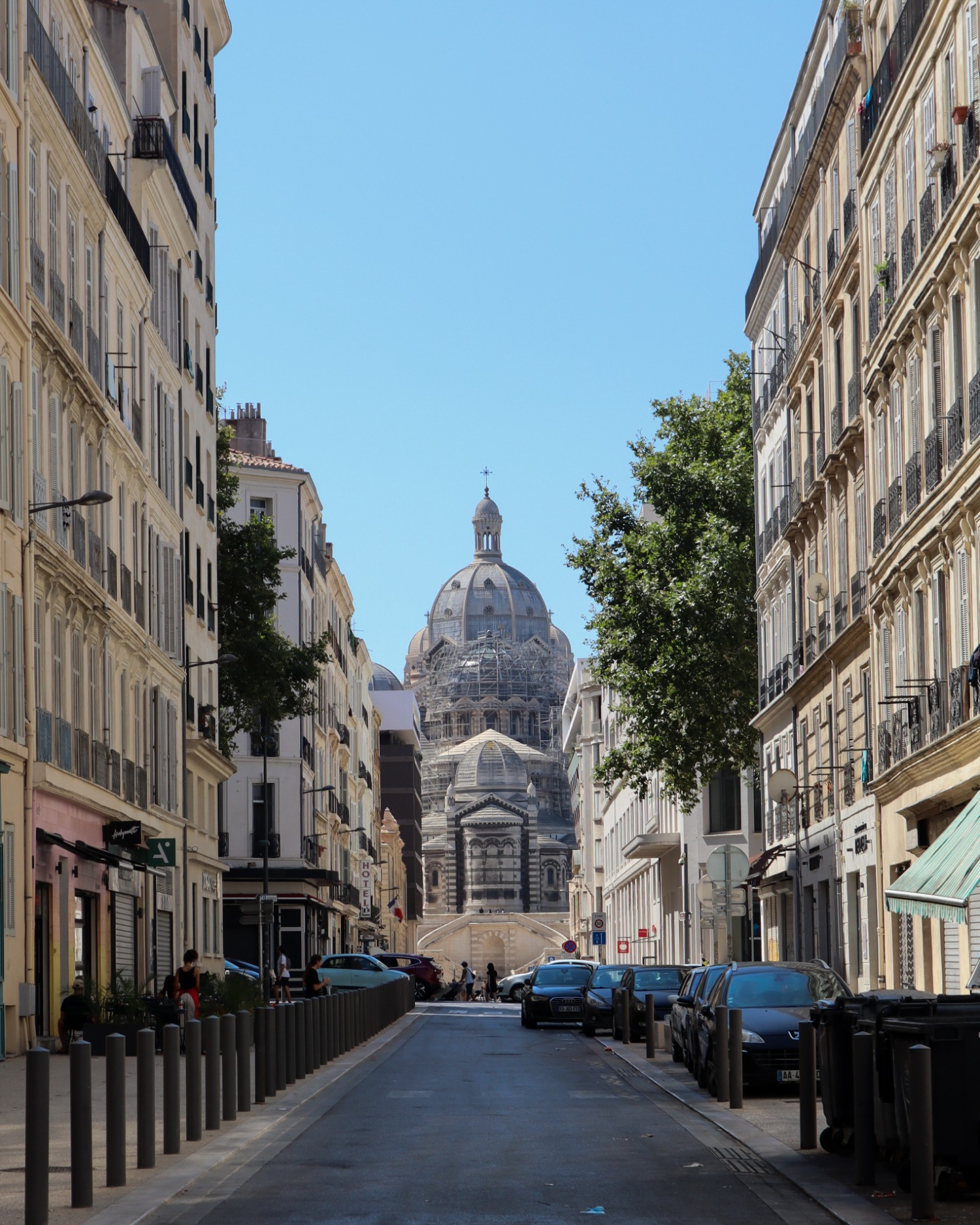
A visit to Marseille would not be complete without paying your respects to the ‘Bonne Mere’, the local nickname for the Notre-Dame de la Garde, the Romano-Byzantine basilica that presides over the city from a historic observation point. On your way up the – fairly steep – pathways and staircases (there’s also a little blue ‘train’ up that departs from the port), you could stop off in Vauban for brunch at Carlotta With, or dinner at Figure or Poissonnerie La Bonne Mer on your way down. At the apex, take a stroll around the broad podium for 360 degree views of the city, the sea, the mountains and the Vieux Port, where it all began.